
01
How the two markets actually work
Compliance vs. voluntary markets, why credits can't cross between them, and how cap-and-trade sets a price on carbon.
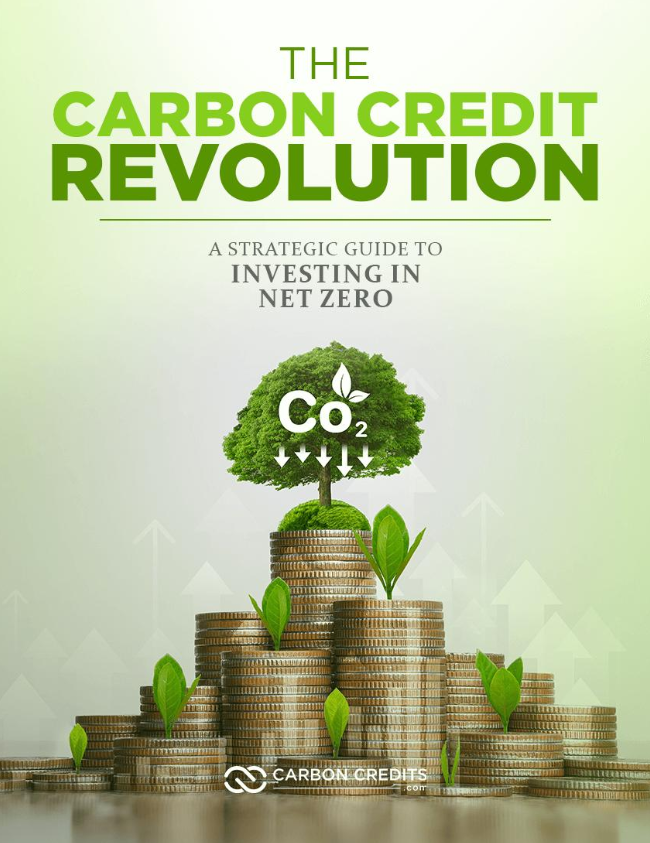
A strategic guide to investing in net zero
A market worth ~$2.5B in 2023 is projected toward $100–250B by 2030 — sitting alongside a $900B+ compliance market. This is the briefing on how carbon credits work, how big the market could get, and where the opportunity sits — written for people who need to understand it before the crowd does.
We just sent a confirmation link to your email. Click it to confirm and your copy of The Carbon Credit Revolution will be on its way.
Written for professionals working across
Compared to equities, bonds, or commodities, carbon is small and undeveloped — which is exactly why the growth curve is so steep. The guide walks the numbers behind that curve.
Voluntary carbon market — value, USD
2023 actual vs. 2030 projection range
Source: The Carbon Credit Revolution, CarbonCredits.com. Voluntary market demand could rise up to 15× by 2030 and 100× by 2050 (McKinsey).
Six things you'll walk away understanding — enough to hold your own in any conversation about carbon.
Compliance vs. voluntary markets, why credits can't cross between them, and how cap-and-trade sets a price on carbon.
A back-of-the-envelope build from Paris Agreement targets — how the private sector's net-zero gap turns into credit demand.
Steel, road transport and energy account for the dirtiest emissions — and why buying credits beats re-tooling for years.
Carbon taxes, price floors, and Scope 1/2/3 emissions heading toward financial statements over the next 5–10 years.
Where they come from, how projects like reforestation and carbon capture get verified, and what "retired" really means.
Early positioning in credits, offset projects and green tech — and the catalysts that could reprice the whole sector.
Every nation that signed the Paris Agreement will likely enact some form of carbon taxation over the next decade — and the market for these credits is set to move with it.
From the guide
Yes. It's free in exchange for your email. We use a double opt-in — you'll get a confirmation link, and once you click it the guide lands in your inbox.
A polished 25-page PDF you can read on any device or print. It's designed to be read in one sitting.
Professionals in carbon markets, ESG, sustainability and corporate finance — plus investors and allocators who are new to the sector and want a credible, fast grounding.
You'll join our research list for occasional insights on carbon and net-zero markets. No spam, and you can unsubscribe from any email in one click.
No. The guide is editorial research for information only. CarbonCredits.com is not a registered broker-dealer or financial advisor, and nothing in the guide is personalized advice. Always do your own research before investing.
Join the readers positioning early in one of the most talked-about — and least understood — markets of the decade.